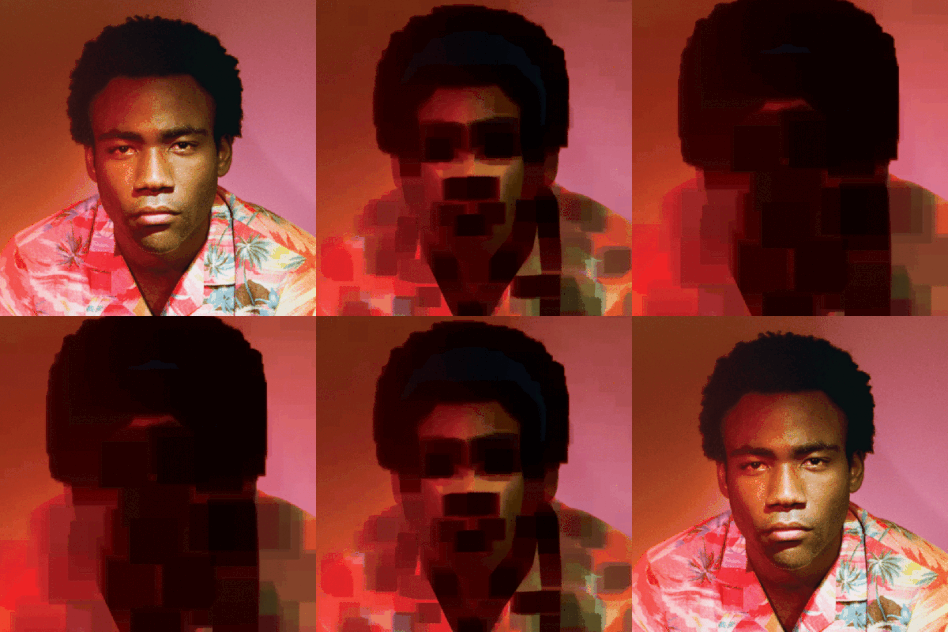
Childish Gambino, “Because the Internet” (Glassnote, 2013)
A lot has changed since 2013. It’s been a decade since Childish Gambino released his second studio album, “Because the Internet.” Since then, he’s put forth many other impressive and challenging albums, but none hit the same as the 58-minute record, which pays homage to why he plays sold-out stages: the Internet. With its creative usage of lyricism, diversity of sound and vibe, and surprising screenplay elements, Childish Gambino put forth “Because the Internet” as an exploratory and unique album perfect for listening to all the way through.
One of the best things about the album is that you only understand what a unique work of art it is once you listen to it all the way through; no skips. It’s unfortunate, though, because you don’t need skips to get through “Because the Internet.” Some songs are well under two minutes, and you ponder their significance before deciding whether you love or hate them.
The significance lies in the story we are told throughout the 19 songs. The most unique thing about this album is that it accompanies a 72-page screenplay by Gambino, specifically designed to sync up with the music. It’s evident through these album features just how much work Gambino puts into his creative endeavors. His brain is so musically advanced that the message and diversity of sounds we see throughout the album make this piece a timeless example of music’s purpose: to be listened to, enjoyed and talked about.
Each song has a unique beat or sound and features lyrics complimenting the sounds it works with. Not one of the songs feels out of place or missing anything. A particularly outstanding example of this lies in a section of the album featuring songs “Dial Up” and “I. The Worst Guys.” Both pieces have the same beat, but “Dial Up” only features instrumentals.
In contrast, “I. The Worst Guys” features the inner ramblings of Gambino and Chance the Rapper as they confront the over-sexualization of their minds and modern-day culture. Both songs have this interesting sample of a high-pitched chime reminiscent of the sounds your computer would make when connecting to the internet decades ago. The low hiss of a maraca-like sound and the vibrant percussion of drums let the ancient internet sound float as a constant in the two songs, reminding one of the themes of this album: the internet.
Gambino struck gold when it came to singles of this album with songs like “3005,” which is lyrically the most poignant and complex song of the album. The song follows a natural human fear: being alone. The music is incredibly fast-paced, and we find Gambino (and ourselves) gasping for air while rapping the internal monologue that comes with isolation and our worries. This song aged well, considering the period of isolation due to a pandemic we were to experience years after the release of the song. The theme comes off a bit romantic, but it’s important to note that the main worry of the song is isolation through and through, whether you’re surrounded by a billion people on the internet or stuck on a deserted island. Gambino reveals through the song that people give him purpose; they light the way for the things he does. As he touches on in “3005,” finding that purpose or goal may be challenging, but it’s our natural human instinct to crave connection through those things.
Just two songs prior, we catch the wind of loneliness as a reoccurring theme “III. Telegraph Ave. (“Oakland” by Lloyd),” which is initially an entirely different vibe, playing out as a scene of Gambino getting into a car, starting it up, and the radio coming on. It sounds as if Gambino is singing along as he’s driving, really getting into the music and feeling the song for how it makes him feel. The lyrics concern a relationship between two opposite people and the move to reconcile the relationship to spark an old flame. This reveals yet again what Gambino (and we) fear the most: being alone. The instrumentals are upbeat, starting slow for the first verse, increasing in urgency, and finally kicking off at the beginning of the chorus. Interestingly enough, the soft voice of Gambino singing the chorus while he switches to his quick rhythmic rapping works, giving us almost two separate people. Here, Gambino’s soft voice sings,
“You know how I get when I’m lonely/And I think about you and the moments/But everything you do is so Oakland, so Oakland,”
Another song that acts as a significant point of reference for the album is “II. Worldstar,” which focuses on the duality of our consumption of social media, virality and the inner workings of the internet. The song references and concerns the media platform WorldStarHipHop, a significant part of the early 2010s pop culture. The song is a play on how obsessive our internet consumption is and how it might have changed how society functions for the worse. With the help of the bits of audio from pop culture and the satirical nature of the beat, we realize this song is a judgment of the internet and its effects on society. Gambino raps, “Ohhh, Worldstar!/Let me flash on ’em, we all big brother now/Lil’ sis, let her run around,”
This album is an overwhelming look into Gambino’s creative mind, and we’re both shocked and swamped by how much is going on. We see the scene progression through the little moments in which Gambino snaps out of music, and the songs even feature numerals, perhaps hinting at acts within the matching screenplay. Through these elements and perhaps through the lagging understanding of this album, we grow stunned by Gambino’s complicated, creative, yet clear thinking. Theres so much within this album worth diving deep into, yet so little word count for it.
 where do we go from here?
Leave a comment