In The Pocket: Indigo Flood at Epiphany Center for the Arts
Hannah Pope, guitarist, vocalist and founding band member, looks inquisitively at the Epiphany Center for the Arts sound engineer for a mic check while slowly, the orchestra of musicians joins to soundcheck brass and keys. Decorated in green and black, the band stands underneath a layer of deep indigo, the color cascading mysterious shadows onto the nine musicians that make up the band Indigo Flood.
The band has played several Chicago stages, including Columbia College Chicago-sponsored stages, where many members are alums. Although the band consists of musicians of many different backgrounds and musical styles, the band combines into a mesh of fusion-indie-blues-rock.
After successfully sound-checking, the crew hurries off to say their hellos to people who have come to support them through their last residency show at Epiphany. After almost a year of playing at the church-turned-music venue, the band has reached their final performance (after being asked back for a final show nearly three times.)
“So much has changed since our first residency show.” Pope continues, “We wanted every show to be better than the last, so incrementally we have been able to challenge ourselves to improve month to month. It was a goal of mine to write a new song for every show, so we ended the year with much more original material than we had when we started.”
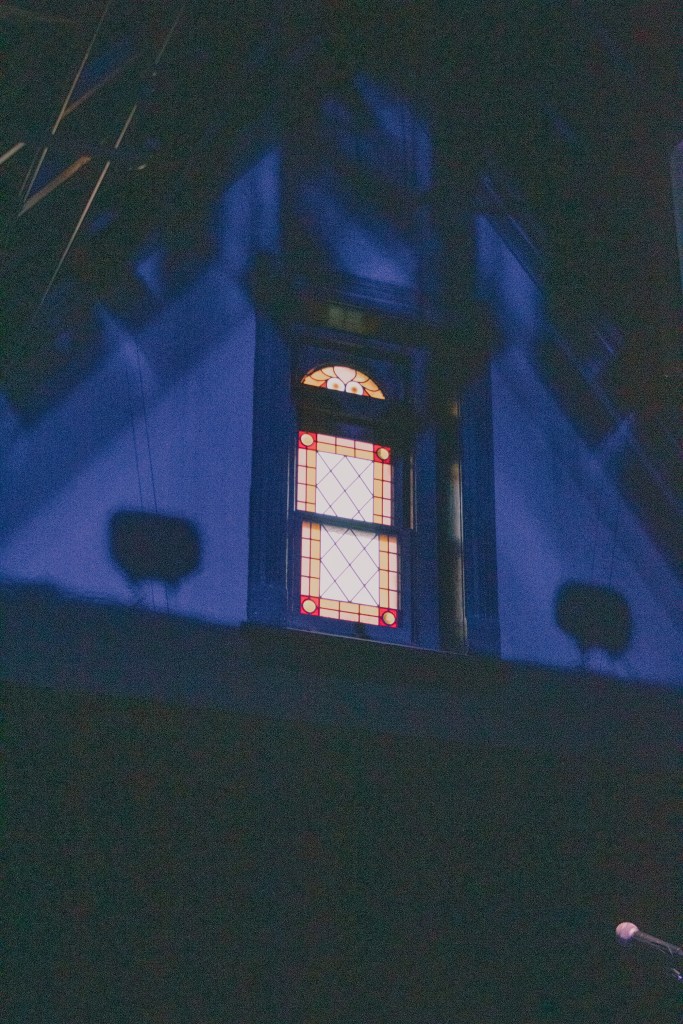
The room is a dark triangular attic with coffee-dark beams holding intricate glass chandeliers. Atop this maze-like church, the stage known as The Sanctuary is almost as close to god as you’ll get here with Indigo Flood tonight. There’s a small rectangle-shaped window above the risen stage. It’s a symbolic taunt to how performance is such a massive part of what brings light into so many people’s lives, and Indigo Flood is about to prove that.
“Playing there [Epiphany] at first was difficult due to the unique shape of the room,” Ren Whitney, drums, reveals, “Every room has different acoustics that wildly affect the listening situation”
The room is loud, full of people of all generations, all having their own conversations, but when Indigo Flood steps on stage, quiet falls like a white flag, and we all surrender ourselves to the music.
After giving in to the white flag, the room goes dark, and the lights go up as the audience gets ready to get drunk on blues.
The music is subtle, hardly being a show-off when with all these musicians combined, it so easily could. Yet it’s also shocking; looking outside at the exterior of the building that so obviously is religious, this type of music is not the type you would picture to consume a room of this building. At the same time, it fits so well. Music so heavenly, so filling for a soul, it’s hard to understand how this music could be contained without the room’s stained glass windows bursting under the weight and the emotions Indigo Flood carries into the room with them tonight.
Pope’s guitar hits inquisitive strums; they’re meticulously loose, showing just how good her feel is for the music like it’s her sixth sense. The drums are classy at the height of the song, making the audience’s eardrums roll over. Will Mallard’s fingers dance profusely along the trumpet’s valves as it screams furiously, and the worn-down brass of the obviously loved instrument sways with the tune of the song. The band meshes together into an unexpected, vibrant tangent, and this first song, “Stuff It!” is only an instrumental hint of what’s to come.
“I know that I was born to play music on stages for audiences, so every time I get to do that, it feels like living in my purpose, and it’s the most connected I feel to other humans,” Mallard, trumpet, said.
Pope and Gracie Lubisky, vocalist, share secret smiles before the vocals come in for the second song. Pope’s gramophone-esque voice enters and transports us back into the grooves and crackly-ness that reminds one of a gently used yet dusty vinyl. Her voice is sticky like caramel, trading off to the saxophone, Deven Duphare, for an extended solo.

Everyone’s instruments dance around the stage without worrying about how scarily tiny the platform looks with the entire band on it. But at the end of the second song, someone in the second row of the audience cheers, “Holy Cow!” almost confirming to everyone else that we were just sent on an intense rollercoaster that would continue for another hour.
Sophie Hafer, pianist and vocalist, starts the third song and sings deeply, looking over at her bandmates as Lubisky sings back, heightening the vocals to a new level in the music. Hafer’s voice is rounded and soulful, just like the song; her voice is riddled with experience.
Tiago Ribeiro, the former co-guitarist of the band, surprises with a solo. Although he has moved out west, Ribeiro returned to perform with the band for one of the final times at the venue. He points the neck of the guitar to the pointed roof as Huff is seen striking the congas confidently, dancing about behind them meticulously and energetically. Huff and Whitney keep the beat together despite being hidden behind and between the other band members. The two are an outstanding duo throughout the song in how they intentionally strike the drums and congas to the groove and eventually tie the piece to its end.
All eyes are on Pope as she begins “When He Comes Down,” a tune that hides much more under the surface. It feels like a spell, like warm sticky air, like being awake in the middle of the night, daydreaming and letting your mind run. Pope’s guitar leads in, and soon everyone else follows.
The next song starts tricky, with the horns giving off notes of suspense, but interestingly enough, the song “Naked Blazer” is bouncy, giving every musician time to shine. Within the blink of an eye, the lights turn green, and we see the stage more than ever. Huff and Whitney trade-off in the song, sharing guessing glances at one another, trying to decipher where the other is going.
“When you’re reading with someone, you can really just do whatever and feed off the other’s energy,” Huff comments about the exchange, “It’s like a conversation.”
The song speeds up and comes to a climax, almost daring the audience to keep up, and finally, it ends with the exhausted release of the trumpet one last time. The song can so easily be described as a tornado as it whips back and forth from instrument to instrument, creating a whirlwind and destructive impact.
After the tandem original, the band begins a cover of “Sun Song” by Stuff that mellows out the crowd. The song is smooth and sweet, something a little easier to sit back and catch your breath to. Hollow percussion of the congas takes us away in which Huff impressively holds down the intriguing flow while also giving his left arm a short break by propping up his elbow on the center part of his congas, lightly tapping the outsides of the rims to create soft sounds.
The lights turn deep red in time for Ribeiro’s deep sultry solo on guitar. The ends of his strings glisten messily, and his face scrunches up to meet the higher notes his guitar hits. The colors of the stage begin to dance in front of us, and the sky has slowly gone dark as the music slows in time for Ribeiro to make a soft exit while Pope introduces the rest of the band.

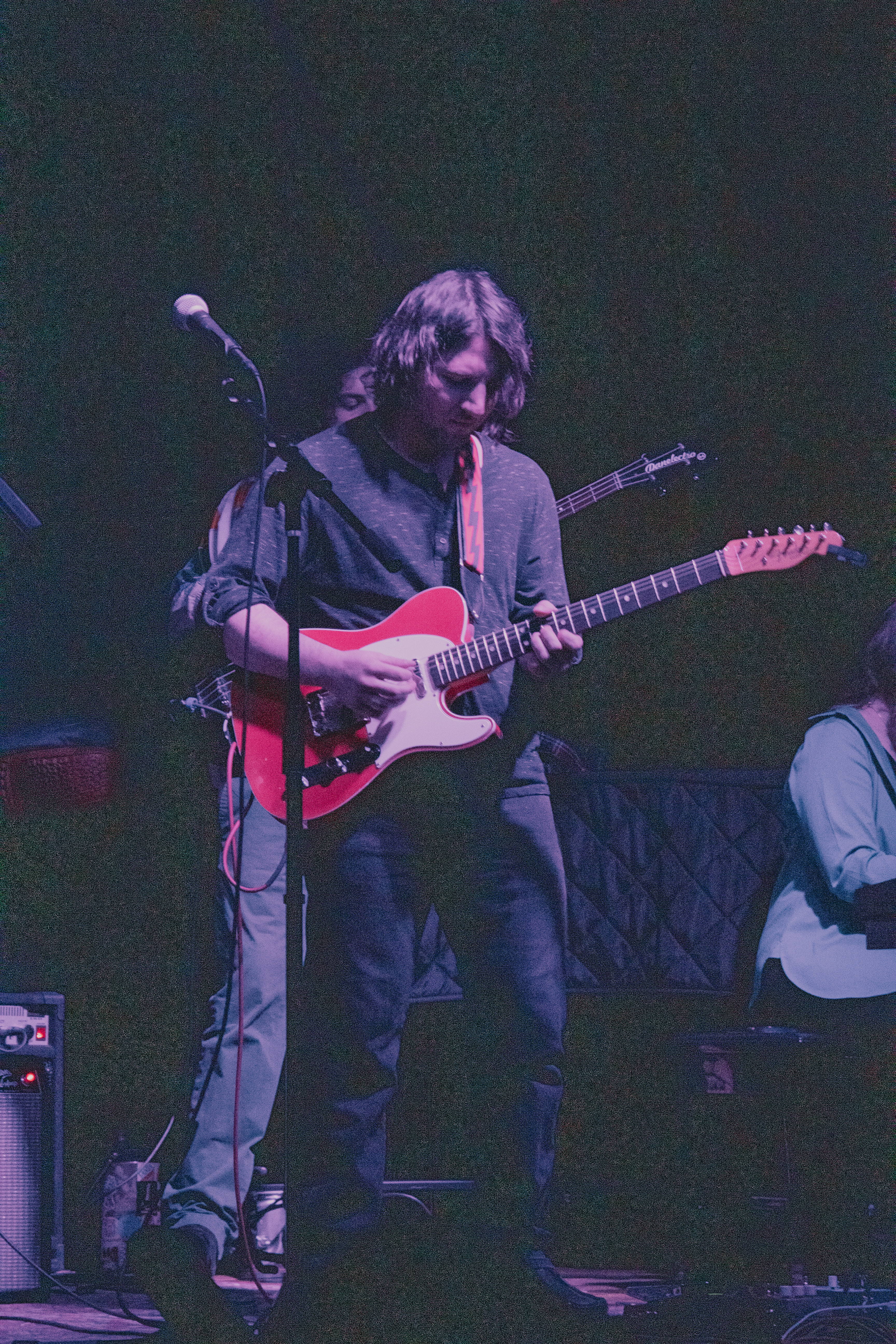
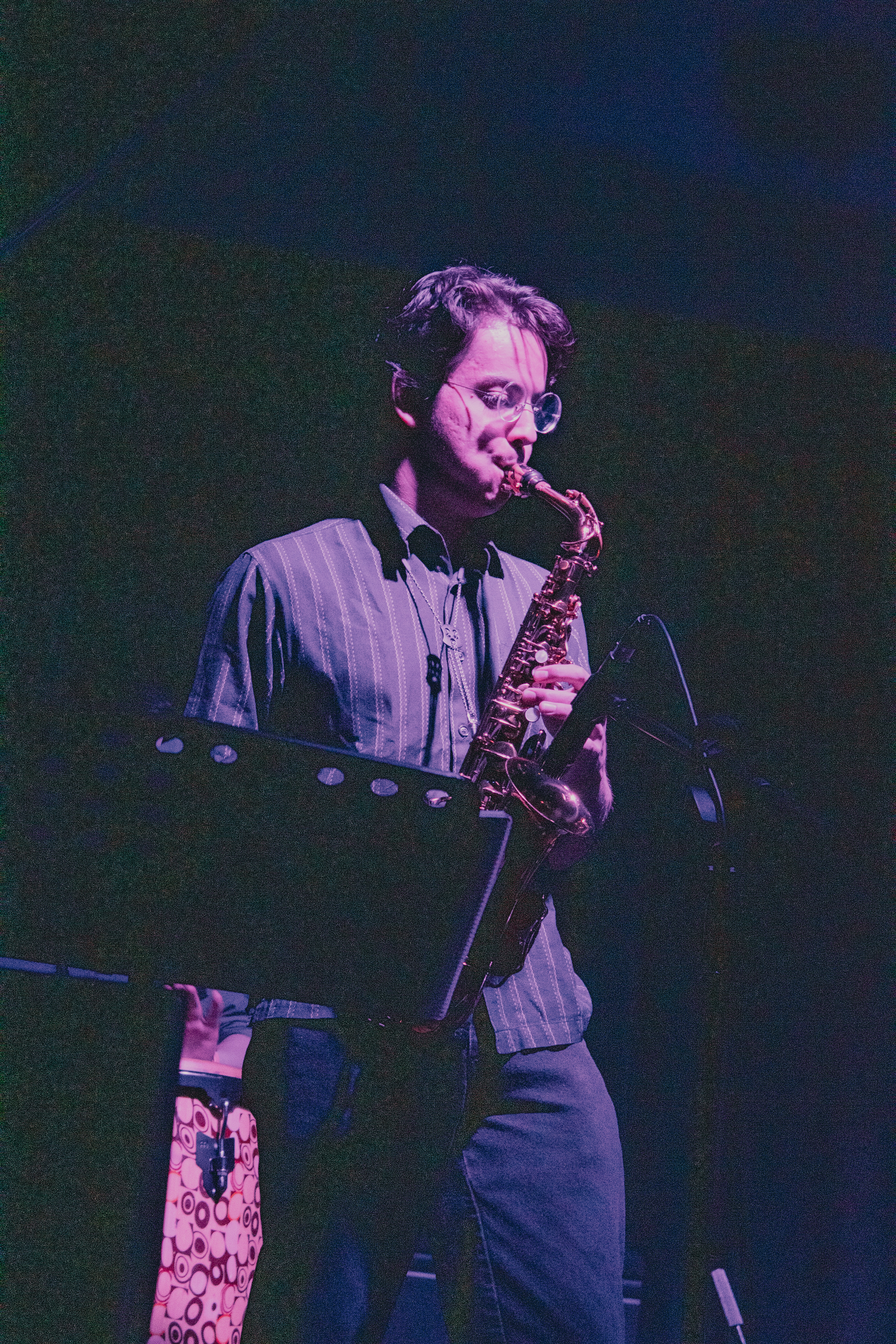
One trumpet. One saxophone. One bassist. One percussionist. One drummer. One keyboardist. Two guitarists. Three vocalists. Together, tonight, they are nine musicians performing as one. A collage of blues littered with emotion and love, sadness and betrayal. This is Indigo Flood.
The next tune is aggressively punchy, like a teenager; it’s sassy and sinister. Like hitting the gas and breaking in a car repeatedly, they jolt their listeners back and forth. The keys add a politely beautiful undertone to the song as all elements congeal together to take us higher than the roof of Epiphany can hold us.
A red bohemian rug sits straight across the stage with three amps, and an effervescent silver drum set sits atop it. Jett Lucas, the current co-guitarist, enters, plugging in his red electric guitar, and a bumpy and angry beat melts across the stage, bringing in Pope’s voice again into a cover of “Cold Shot” by Stevie Ray Vaughn.
Ilan Meged, bassist, throws back his instrument and head at once, practically begging for the audience to listen to the band’s sermon of music, bearing sins galore all at once. Gluttony stings in this song after the punchy ending. We switch to white light, where the saxophone takes us to heaven and back in “Adjustments.” Duphare is rigid but right on all parts.
Hafer’s hands conquer a piano solo, making you wonder how these people are so damn good. It leaves us devastatingly yet pleasantly shocked. The keys solo is almost a nice contrast to the husky brass duo. Whitney and Meged contribute complimentary hits on the song’s upbeat as the crunchy sound of Lucas on guitar rolls in like a thick, low fog. His head bobs to the music like it’s running through his blood. Pope and Lucas complement on guitar almost as if they fit together in the song like two puzzle pieces.
The keys and drums do a clean trade-off and complement one another while Lubisky’s vocals fill hauntingly in “Oblighetto.” We take another turn, and the pace speeds up as the rest of the band follow in and feed off one another in the simplest yet most intricate way. It makes one feel like they’re running a race or (ironically) going through a spiritual journey (Get it? Cause they’re playing in a church?) So many ups and downs, so many details to digest. It’s like the easiest form of indoctrination Indigo Flood could pull off as a jazz blues band. This song highlights the difference in everyone’s styles and backgrounds and meets in the middle. Everyone is fluid in their movements, working as a well-oiled machine.
In the blink of an eye, Lucas comes alive, and his fingers become more erratic as his guitar squeals out notes that effectively contrast with the steady rhythm the rest of the band is keeping up with. The trumpet takes us on a tangent, and while hitting the notes, Mallard takes his feet off the floor one by one and sways back and forth in place. After Mallard’s journey on trumpet, he inaugurates the rest of the band, turning to them and facing the audience again.
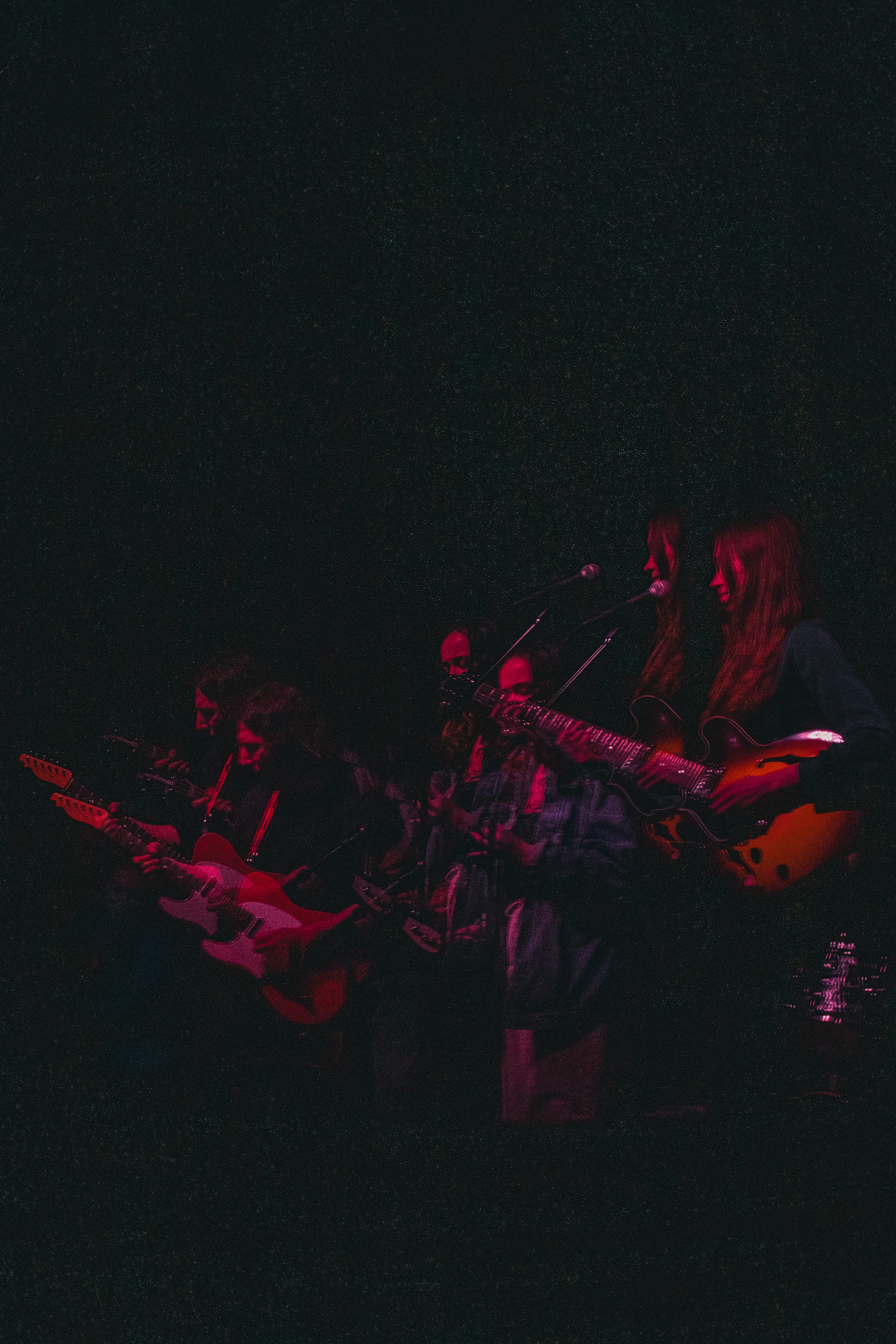
We return to the original beat of the song as Lubisky’s legs sway back and forth against the beat of the drums. The falsetto, operatic cries return again as her hands clutch the microphone at the front of the stage.
After a sassy rock-meets-blues song, “Woman Across the River,” that’s guaranteed to make you want to get up out of your seat and make you get down, we’ve reached the real gem of the show: a song called “You to me are the Blues.”
The song is a beautiful homage to all that this band stands for. With striking electric guitar solos by Lucas and Pope’s electrifying vocals and lyrics, the song is emotional and bittersweet. It’s like a sunset; it’s natural to Indigo Flood.
And under the purple hue of Epiphany on this warm June night, I don’t think Indigo Flood could be more at home, more themselves. You can see it in the way they delicately warm up with their instruments or the way their skin reflects under the spotlight. You feel their purpose in the way their lyrics strike the soul and echo throughout the room.
When Pope begins her guitar solo at the end of the song, it’s hopeful and simple, it’s a clear indication that they put their everything into this music, and the music gives back in the most special of ways. The appreciation for the music they play and the craft they practice is a breath of fresh air in a constantly moving environment.
Looking back at the beginning of the show, Huff said, “Without further ado, let’s rock,”
And rock, they did.
 where do we go from here?
Leave a comment