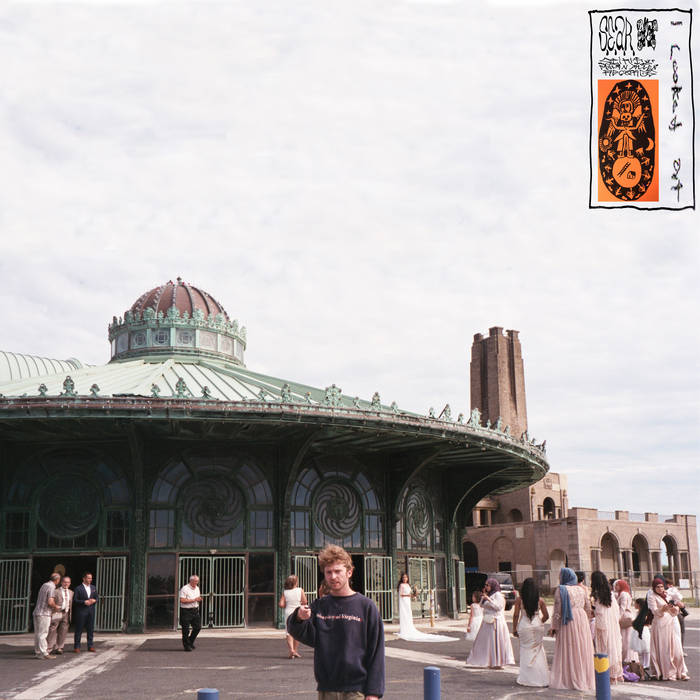
Greg Freeman, “I Looked Out” (Bud Tapes, 2022)
As haunting and familiar as a dream, Greg Freeman and his eponymous band astonish with their first studio album, “I Looked Out.” A terrifying deja vu of a summer Saturday night strolling on the lakefront or a shift change of driving duty on a Florida road trip, this album is reminiscent of not only music genres, but of whirlwind memories. Freeman brings modern rock to the table, with lasting hints of a blues and jazz reference, while composing winding lyrics to bring his evocative melodies to life.
Freeman starts with “Horns,” a cryptic beginning to discovering what genre this album falls under. Evocating an ominous orchestras gear up to a complicated show, this collision of distorted droning tones sets up the perfect clash of sounds to be dissected through the remaining nine songs. The song itself lets hints of anxiety seep into the instrumental-only piece. Although under a minute, Freeman enables the music to take an unexpected and disconnected turn compared to the other songs on the album.
We hear the country-twanged voice of frontman Greg Freeman in the first 10 seconds of “Right Before the Last Waves Took Vestris,” accompanied by just an electric guitar. Then drums come in with the hint of saxophone, a complete orchestra, singing a melody of the melancholy between two lovers. Then before the last 30 seconds of the song overtakes, the orchestra of band instruments ignites a spark and lights a fire in ears. Just when instrumentals take spotlight, Freeman teases by taking a split-second break in the music and before the blink of an eye, the instruments come together again to round out the song on a high note.
“Long Distance Driver” is where Freeman and his band’s artistic talent is really highlighted. We take a slower turn in the album, much more somber and longing than the first two songs. Freeman sings about a lover and their travels. Still, the lyrics of this song are elevated by Freeman’s wavering but firm voice, accompanied by the scary-yet-satisfying workings of his two saxophonists. This song is where we see the fusion of jazz and rock officially meet.
The song itself is midnight of the album, its soul-stirring and awakening. The slower beat of the drums allows for the lyrics to shine in this song, “Long Distance Driver, press me to your head, We can lose the miles, somewhere in your bed,” The sour notes and twang of the guitar in combination with the steady beat of the drums allows the perfect space for the saxophone to take the song away. Playing a melody filled with worry, the distortion and echo of the woodwind instrument throughout build to a crescendo marking the end of the song.
“Colorado” surprises, taking a more jumpy turn, with it being the album’s main single. Starting heavy in instruments, Freeman allows the band the opportunity to prove this clash in sounds is entirely working in their favor. Matched with the raw and imperfect (in a good way) vocals, this song is the catchiest with an upbeat modern rock emphasis, not missing the slight hint of country rock. “Colorado” tells the story of a man once in jail that Freeman meets in Flordia at his son’s wake.
An electric guitar solo provides the grittiness necessary to end the song lyrically,
“Through highways, and deserts and cities and parks, and broke schools protected by the national guard / Most days are passed with my head in the dark / Today; it seems so clear.”
And with Freeman’s lyrics, we begin to see clarity in the creative uniqueness of this album.
We are led into the maze-like mind of Freeman expressing his self-doubts through “Come and Change My Body” the lyrics twist and turn, reminiscent of an uncertainty-filled spiral. In this song, above all others, we see the combined artistry of all the musicians equally playing their part. The music appears kept together, solemn, hitting one note, while the lyrical and tonal aspects of the song reveal a different side to the story. Believe it or not, the tie-together is a harmonica solo by Freeman where both the public and private aspects of this mental struggle are in sync. However, the harmonica and eventual horns bring a sense of humbleness to the song, and electric guitar and drums seep in again to remind us of the strength of the rock influence of this record.
Bass takes center stage in “Tower,” which starts with a strong yet comfortable bass line. Reminiscent of a Radiohead “In Rainbows” song, the instruments work unsuspectingly until the chorus, when the band explodes at the seams with resentment, anger and frustration. Inarguably, the bass carries this song; although quiet compared to the other instruments in the later half of the song, the satisfying bass line hits any mark necessary for the song to constitute any enjoyable modern rock song.
The album’s last three songs give us space to get comfortable with the concept that this album is more than modern rock. It’s a hodge-podge of blues and jazz, country, and certainly of rock, with indie remnants in the lyricism.
Freeman astonishes with “I Looked Out,” but above all else, Freeman inspires and puts forth an honest and understanding piece of work, comforting to the soul.
 where do we go from here?
Leave a comment